
Life in Downtown Miami
Welcome to Downtown Miami, the city’s historic civic and commercial center and one of South Florida’s most recognizable urban waterfront districts. Set between Biscayne Bay and the Miami River, Downtown combines a working business core, cultural institutions, public parks, historic streets and a growing residential population. Its character is not simply a skyline of glass towers: it is the meeting point of Flagler Street’s older commercial fabric, the bayfront parks and museums, the river’s active edge and a dense collection of condominium buildings. Downtown sits within the City of Miami in Miami-Dade County. Its commonly understood central core runs around Biscayne Boulevard, Flagler Street, Government Center and the lower Miami River, with the waterfront to the east. It meets the Arts & Entertainment District and Omni toward the north, Overtown toward the northwest and Brickell south of the river; Edgewater lies farther north. These adjacent areas are distinct neighborhoods. There is no single legal neighborhood boundary that governs every use of the name Downtown Miami. The City’s Downtown Miami Historic District is a defined, compact preservation district, while the Miami Downtown Development Authority uses a separate planning boundary and subdistrict maps. Residential life here is vertical and connected. Condominium towers offer a range of layouts, building ages, services and views, while shops, restaurants, offices, museums, performance venues and transit stations share the same urban grid. Bayfront Park and Maurice A. Ferré Park bring public green space to the bay; the Miami River adds promenades and marina activity; and Flagler Street preserves the memory of Downtown as Miami’s original commercial center. Nearby Brickell brings a different financial-district and residential atmosphere, while Omni and Arts & Entertainment are known for major cultural and event venues. Buyers should compare the exact building, block and route—not rely on broad neighborhood labels alone.
A Waterfront Center with a Distinct Urban Identity
Downtown Miami occupies the historic urban core of the City of Miami, in Miami-Dade County. Its everyday geography is shaped by Biscayne Boulevard and Biscayne Bay to the east, the Miami River at its southern edge, and the civic and commercial streets around Flagler Street and Government Center. The area is connected to the Arts & Entertainment District and Omni to the north, Overtown to the northwest, and Brickell south of the river. These are neighboring districts with their own identities, not interchangeable parts of Downtown.
Downtown does not have one universally applied neighborhood boundary. The City’s designated Downtown Miami Historic District is a much smaller preservation area, generally bounded by NE 3rd Street, SE 3rd Avenue, SE 2nd Street and NW Miami Court. The Miami Downtown Development Authority uses a separate planning and service district with its own published maps and subdistricts. For this guide, Downtown refers to the commonly recognized central business and residential core; the formal historic and DDA boundaries should be consulted for regulatory or property-specific questions.
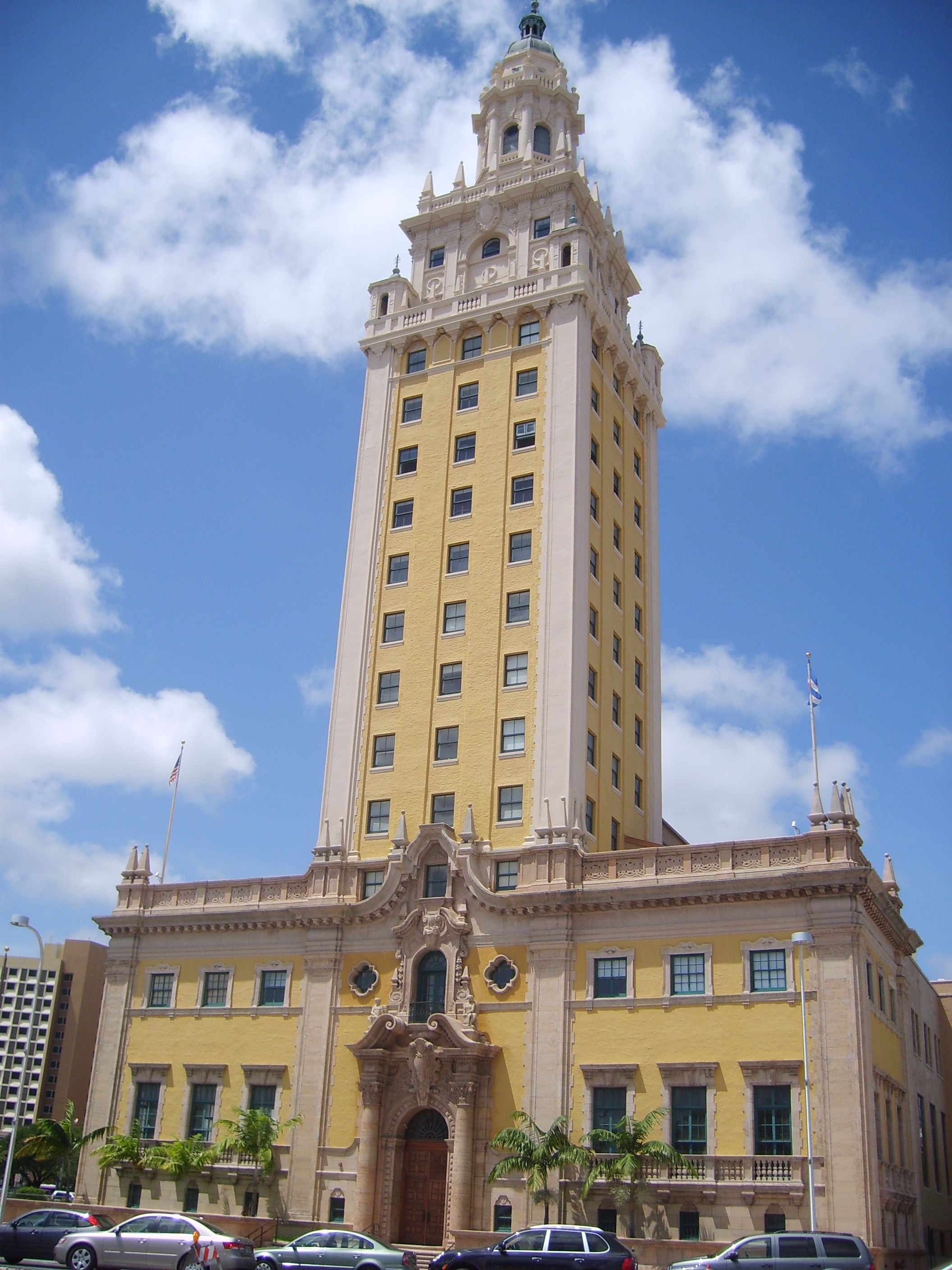
Flagler Street, Civic Landmarks & the Historic Core
Downtown’s story is closely tied to the Miami River, Biscayne Bay and the arrival of Henry Flagler’s Florida East Coast Railway in 1896. The settlement incorporated as the City of Miami on July 28 of that year. Flagler Street—formerly Twelfth Street—became the commercial spine, while the city’s growth produced banks, hotels, theaters, civic buildings and department stores that still give the center its layered streetscape.
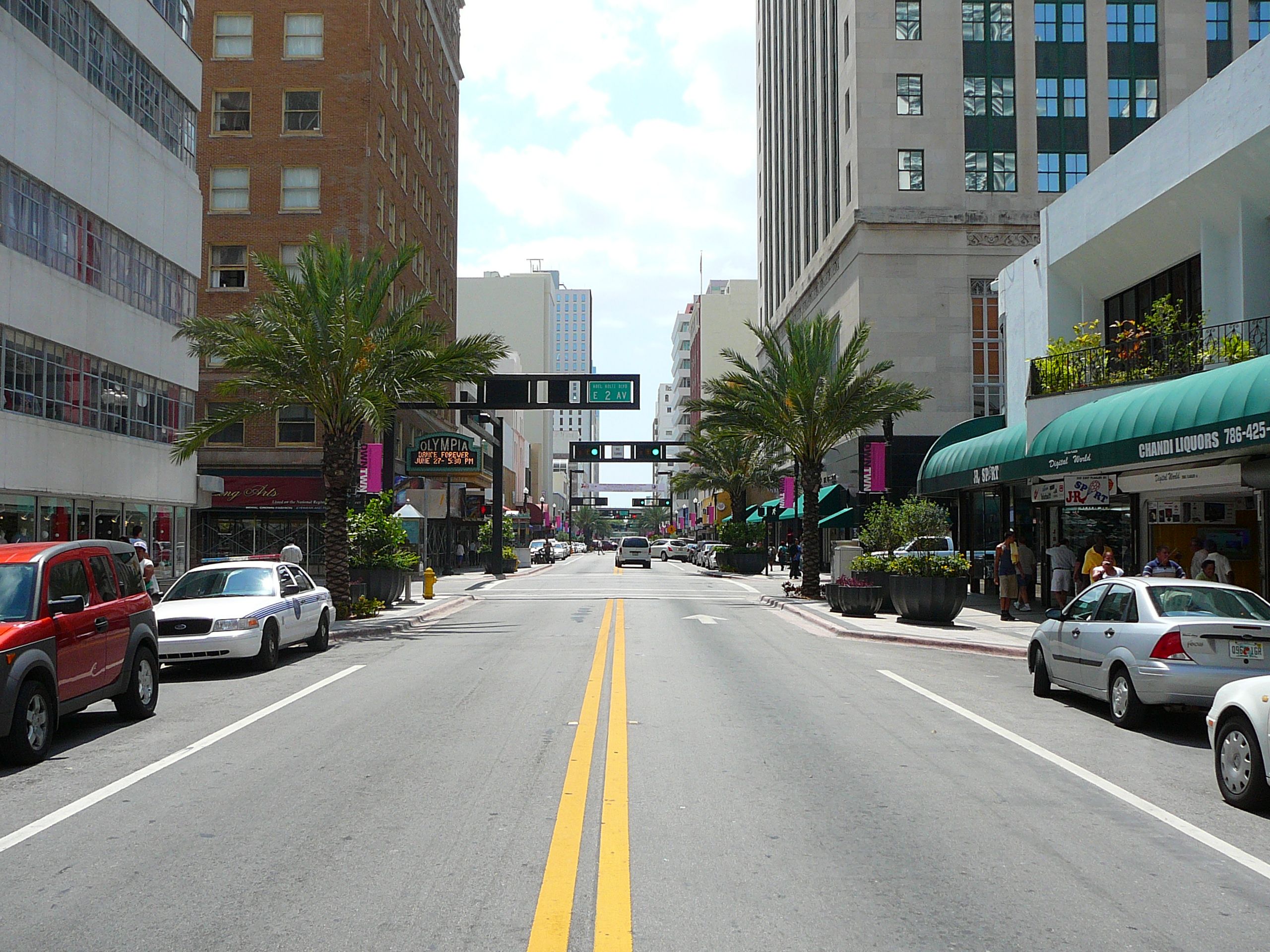
The designated Downtown Miami Historic District preserves buildings from 1903 to 1955 and includes Masonry Vernacular, Commercial, Mediterranean Revival, Art Moderne and Neoclassical Revival architecture. Notable landmarks in the wider Downtown core include the Olympia Theatre on East Flagler Street, the Miami-Dade County Courthouse on West Flagler Street and the Freedom Tower near Biscayne Boulevard. Their locations and histories are distinct; together they tell the story of a compact commercial center that has repeatedly adapted to new waves of growth.
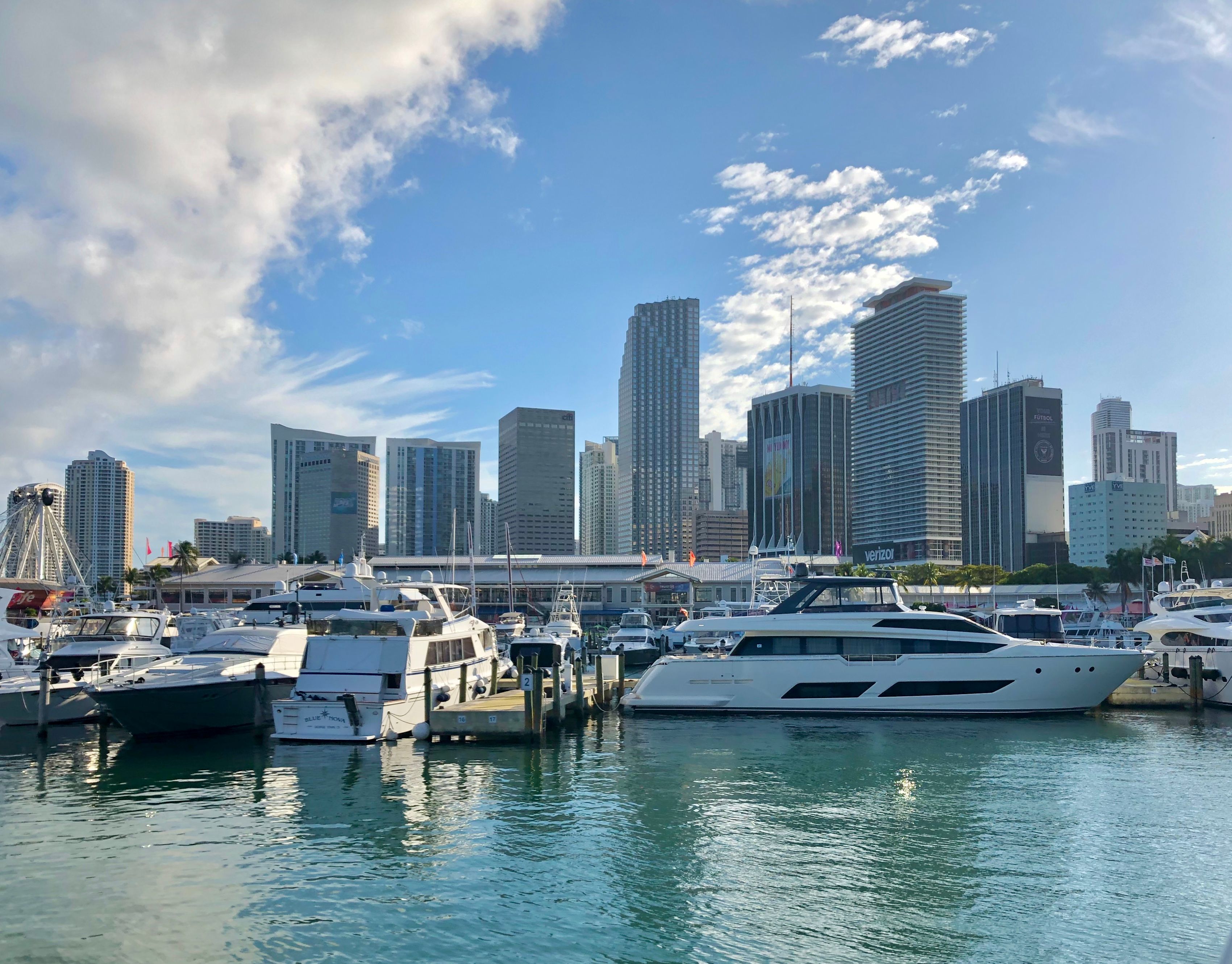
Bayfront Parks, Museums & the Miami River
Downtown’s public waterfront is one of its defining assets. Bayfront Park provides a broad green edge along Biscayne Bay, while Maurice A. Ferré Park—formerly Museum Park—extends the waterfront north toward the Pérez Art Museum Miami and the Phillip and Patricia Frost Museum of Science. The parks offer open space, public art, walking routes and places to pause beside the water; programming and access can vary with events and maintenance.
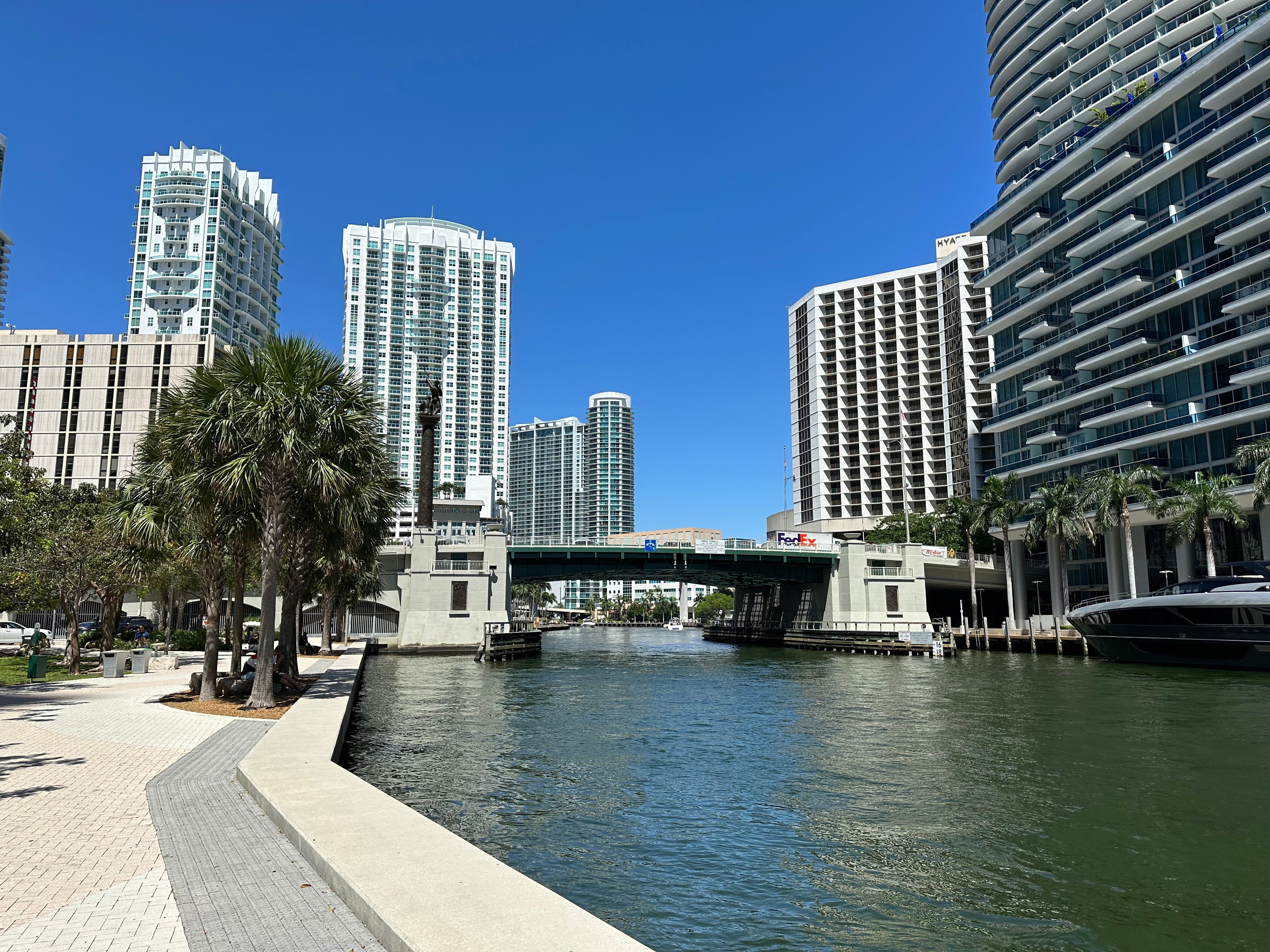
At the southern end of the district, the Miami River adds a different waterfront atmosphere, with promenades, bridges, marinas and working river activity. Bayside Marketplace, Kaseya Center and the cultural venues around Museum Park add dining, shopping, performances and major events to the area. Some destinations sit at Downtown’s edges or in adjacent districts, so a property’s actual walking route and entrance should be checked rather than assuming every attraction is immediately nearby.
Condominium Living & Residential Choices
Downtown is predominantly an apartment and condominium market, with residential towers interwoven with offices, hotels, civic buildings and retail streets. Buyers can find full-service high-rise residences, smaller urban apartments, loft-style layouts and mixed-use buildings close to transit and the waterfront. Views, exposure, floor level, building age, association finances, reserves, insurance, assessments, rental rules and planned capital work can differ substantially from one condominium to the next.
The existing Tryphe building directory links 13 Downtown records, including 50 Biscayne, Aston Martin Residences, Epic Residences, Met 1, One Miami East and West, The Elser Hotel & Residences, Centro, Loft Downtown I, The Loft 2, Vizcayne North and South, and YOTELPAD Miami. These are examples represented in the directory, not a ranking or a guarantee of current availability. Buyers should compare each building’s exact address, governing documents, maintenance obligations, amenities and current financial condition, and distinguish completed residences from any separately marketed future development.
Metromover, Metrorail & a Connected Urban Core
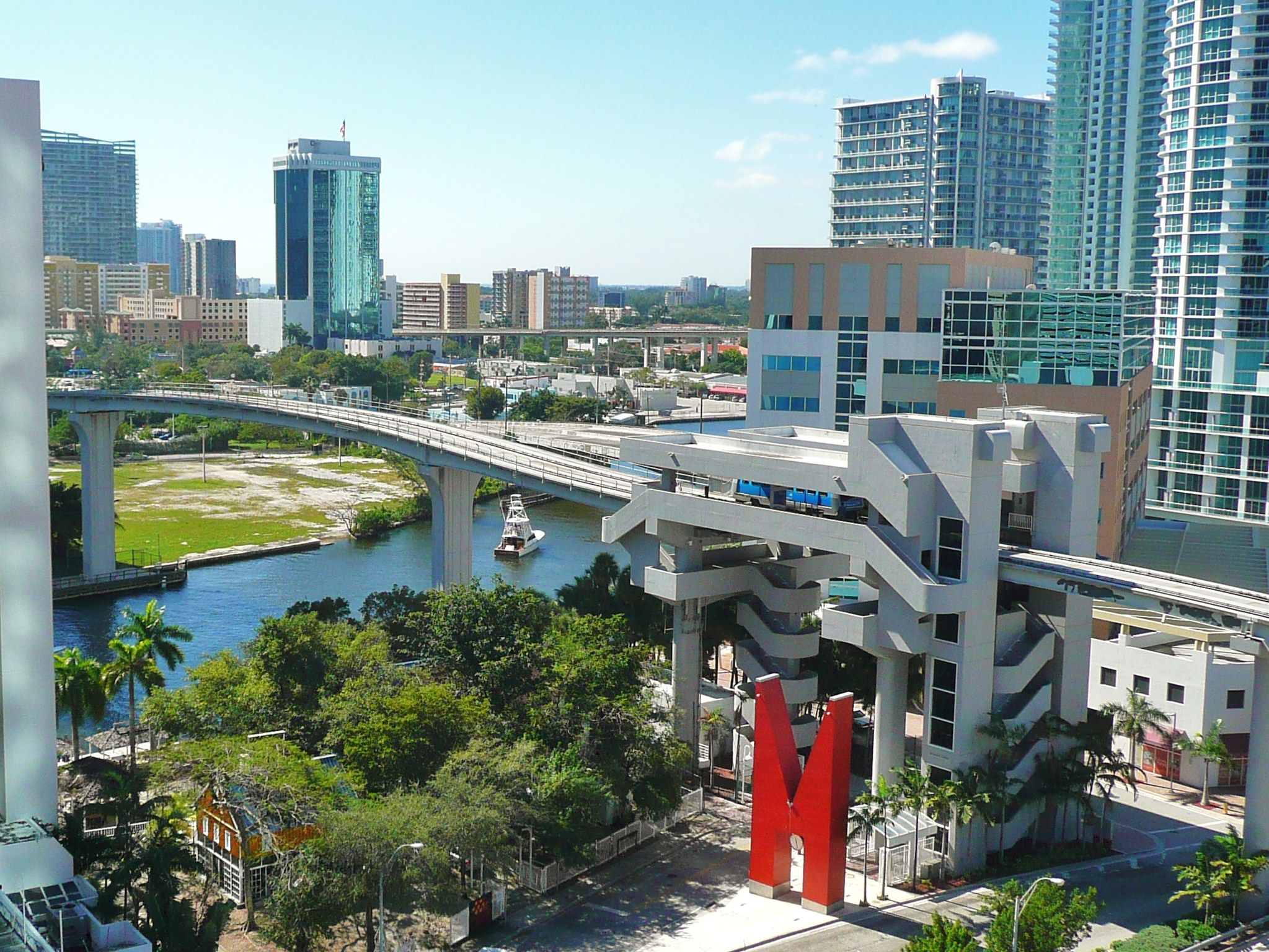
Downtown is one of Miami’s strongest locations for public-transit access. The free elevated Metromover circulates through Downtown, Omni and Brickell on three loops, linking places such as Government Center, Bayfront Park, Bayside and the Kaseya Center area. Government Center is also a key interchange with Metrorail, which connects Downtown with other parts of Miami-Dade County and Miami International Airport. Brightline’s MiamiCentral station is nearby in the Overtown/central station area, rather than inside every part of Downtown.
Walking is practical for many trips within the central grid, especially around Flagler Street, Biscayne Boulevard and the Metromover stations, but block lengths, traffic crossings, shade and construction can affect the experience. The Miami DDA’s current planning work emphasizes better sidewalks, waterfront Baywalk and Riverwalk connections, bicycle routes and transit access. For daily life, test the actual route from a prospective home to the station, grocery store, workplace or waterfront at the times you expect to travel.
Condominium Buildings in Downtown Miami
Explore the Downtown buildings represented in Tryphe’s existing directory. The collection includes established condominium towers and newer residential formats. Building pages and current availability should be reviewed individually; inclusion here is not a statement of endorsement or inventory.

50 Biscayne

Aston Martin Residences

Centro
Delano Residences & Hotel Miami

Epic Residences

Loft Downtown I

Met 1

One Miami East

One Miami West

The Elser Hotel & Residences

The Loft 2

Vizcayne North
Showing 12 of 15 buildings
Downtown Miami Map
Browse buildings by location. Select a pin or a card to preview the building.

Downtown Miami Schools & Education
Top-rated schools serving Downtown Miami.
New World School of the Arts
School For Advanced Studies Wolfson
Law Enforcement Officers Memorial Senior High
Downtown Miami Charter School
Visit website ↗KLA Schools of Brickell
Visit website ↗KLA Elementary
Visit website ↗WorldEd International School
Visit website ↗Brickell Heights Elementary
Visit website ↗Mater Academy East Charter School
Visit website ↗RJW The Academy of Arts Sciences
Visit website ↗Show all 10 schools
Downtown Miami FAQ
Where is Downtown Miami?
Downtown is in the City of Miami, Miami-Dade County, between Biscayne Bay to the east and the Miami River to the south. Its commonly understood core centers on Biscayne Boulevard, Flagler Street and Government Center.
Does Downtown Miami have official neighborhood boundaries?
There is no single legal neighborhood boundary used for every purpose. The City designates a smaller Downtown Miami Historic District, and the Miami Downtown Development Authority publishes a separate planning district map. Check the relevant map for zoning, preservation or property questions.
What types of homes are available in Downtown?
The housing stock is primarily condominiums and apartments, including full-service towers, smaller urban units and loft-style residences. Building condition, association finances, reserves, insurance and rental rules should be reviewed individually.
Is Downtown Miami walkable and connected by transit?
Many central destinations are walkable, and the free Metromover and Metrorail provide important connections. Walkability still varies by block, crossings, shade and construction; test the route from the specific building.
Explore Downtown Miami Residences
Connect with our team for personalized guidance on luxury residences and investment opportunities in Downtown Miami.